The Legends of Meteorology series investigates the most famous historical figures in weather. I will go beyond a simple recount of the great work that helped them to achieve legend status by evaluating their status in several other ‘non-standard’ categories. Along the way you will likely learn some new things about each person.
As you peruse the categories, click on them for more information about what they are and how legends are evaluated. The numerical ratings are from 0 to 99 (elite). Previous legends are linked below.
| Legend | Overall Rating |
| Ben Franklin | 92 |
| Ted Fujita | 96 |
| Vilhelm Bjerknes | 94 |
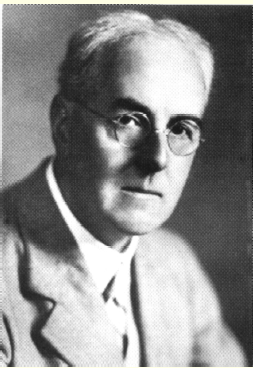
Today’s legend is Lewis Fry Richardson.
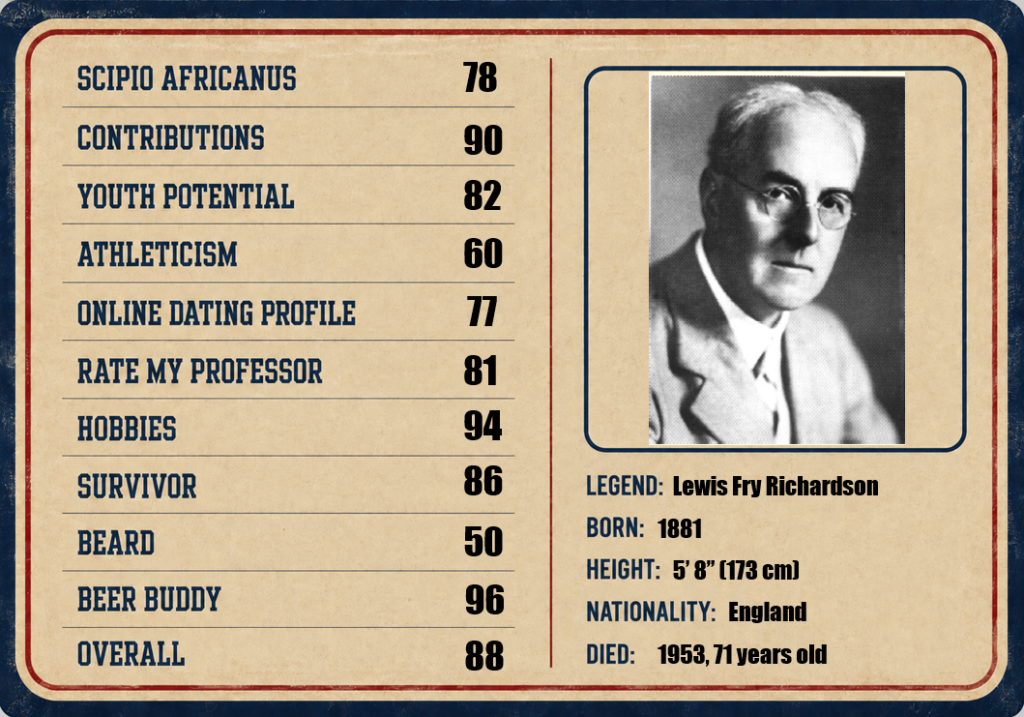
Scipio Africanus (Name Coolness) 78
‘Lewis’ is of Celtic origin, meaning ‘famed warrior’. Well, Richardson didn’t exactly posses the qualities nor skills of a warrior – but he was certified in First Aid. ‘Fry’ is a familial name passed down through Richardson’s Quaker lineage. ‘Richard’ is a common surname in northern England, originating from Old German ‘Ric’ (king) and ‘hard’ (strong).
At some point ‘Lewis Fry’ became ‘L.F.’ – not quite as cool as my first and middle name abbreviation (C.C.), but notable nonetheless.
Contributions 90
In our previous chapter, we learned about Vilhelm Bjerknes, the legendary Norwegian scientist who developed the blueprint for modern computer modeling of the weather. Richardson is the first who attempted to execute it…while driving wounded soldiers around battlefields.
Lewis Fry was a pacifist and conscientious objector who resigned his scientific post to contribute to the war effort. In between his duties as an ambulance driver, he produced the world’s first objective weather forecast – a 6-hour pressure forecast initialized on May 20, 1910. Why that date? Bjerknes provided Richardson with a detailed set of observations on that day. Without an accurate initial state, accurate weather forecasting is impossible.
Richardson made the forecast by solving complex mathematical equations over 30,000 times. He found solutions by hand, since Apple and Microsoft weren’t making computers at the time. This took about three months to complete (he did have to drive his ambulance too). The result? He forecasted a 145 mb rise in pressure over six hours; the verification was close to 0 mb.
It was a spectacular failure at the time. But like many scientific legends before him, public opinion would vindicate Richardson some 30 years later when another meteorology legend (Jule Charney) led a group that would successfully make a weather forecast using the same technique – with the help of a computer.
Richardson’s efforts led to the publication of his most famous work after the war, 1922’s book Weather Prediction by Numerical Process. He laid out his vision of how a weather forecast could be done. He imagined a giant concert hall of people, each tasked with solving the predictive equations for their location and communicating their result to a chief ‘conductor’ in the middle of the hall. ChatGPT produces this image when I provide it with Richardson’s description:
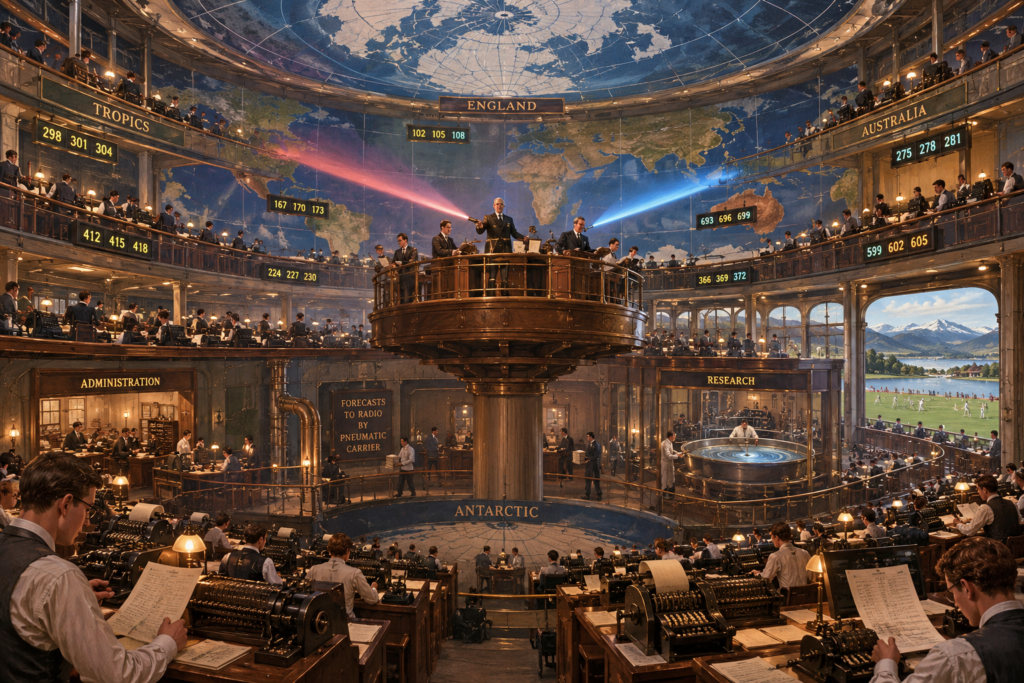
This is basically how modern weather forecasting works, except for the part where supercomputers do the calculations instead of thousands of people stationed in a concert hall. If you’d like to see how a human realized Richardson’s vision, see the famous painting here.
Richardson accomplishments go beyond meteorology and would take too much space to go deep into them here. His work in turbulence and stability are legendary. He has a scientific number (the ‘Richardson’ number) named after him. He developed the ‘4/3’ law of turbulent diffusion. Richardson was an observationalist whose work is still relevant today in aviation, meteorology, and oceanography.
Youth Potential 82
Richardson (b. 1881) was born into a Quaker family during industrial revolution in Newcastle upon Tyne, England. He was the youngest of seven children and the only legend of meteorology from his family.
His inquisitiveness was evident at a young age. Young Lewis Fry ran an experiment at the age of five years old when his elder sister told him that “money grows in the bank”. So, Richardson buried some cash in the garden, but was disappointed that it did not grow.
Newcastle at the time was a burgeoning industrial hub at the onset of the Industrial Revolution. The coal-filled skies provided a perfect observatory for the young observationalist to track smoke plumes and ponder the patterns of eddies and turbulence in the air.
In his early teens, Richardson had a number of diverse natural interests that kept his mind engaged. He maintained a diary of birds, insects, flowers, and weather. His talent in mathematics and the sciences was realized at King’s College, University of Cambridge. Richardson graduated in 1903 with first-class honors.
Although his talents as a youth were clear, it didn’t seem anyone realized that there was a legend of meteorology in their midst.
Athleticism 60
There is little evidence that Richardson engaged in any organized athletic or physical activity. His work and the experimental approaches he chose frequently took him outside. One interesting experiment occurred following the Titanic disaster in 1912. Richardson wondered if the accident could have been avoided had the Titanic been sending out focused acoustical pulses. By measuring the time it took for the pulses to return to the ship, distances to objects (icebergs) could be calculated. Lewis Fry tested his idea on a lake with his wife, a dinghy, an umbrella, and a whistle. His work led to two patents and the eventual development of sonar six years later.
Online Dating Profile 77
Richardson married at the age of 28 and they adopted three children in the following years. It’s quite likely he would have been online looking for a relationship before then – if that were a thing in the early 1900s. Dating would probably not have been his strong suit. He was probably average height, lean, and generally clean shaven. Lewis Fry was a bit of lone wolf in his work and this likely would have translated to his dating. He was viewed by some as a failure – for his weather modeling experimental result – and coward for his conscientious objection of war.
As the years passed, this characterization faded. Today, Richardson is universally applauded as a pioneer in weather prediction and an applied mathematical genius. I’m sure the English accent would have played nicely overseas as well. And bonus points for the introvert vibe; that’s my style.
Rate My Professor 81
A traditional academic/research career was not in the cards for Richardson. He was denied access to many opportunities because of his pacifism. However, he did teach at two separate institutions later in his career. From 1920-25, Richardson taught Physics and Mathematics to undergraduate students at Westminster Training College. A few years later, he moved to Paisley Technical College near Glasgow, where he taught until 1940.
I was not able to uncover teaching evaluations of Richardson, but his biographer describes him as ‘conscientious and caring’ but not the world’s best teacher (Ashford 1985). As the world moved yet again towards global conflict in the 1930s, Richardson’s attention during this time focused more on psychology and questions on war, peace, and nationalistic arms races.
Hobbies 94
Like many legends, Richardson’s work seemingly dominated his time. In fact, at one point he asked if ‘solitude’ could be considered a hobby! As for more ordinary hobbies, Richardson frequently made jam and liked to work in his garden, especially in his later years.
Perhaps we can attribute one other hobby to Richardson – poetry. In graduate school, I was in the middle of a rather boring lecture on frictional dissipation of wind when our professor broke out this rhyme:
“Big whirls have little whirls / that feed on their velocity / And little whirls have lesser whirls / and so on to viscosity” – L.F. Richardson
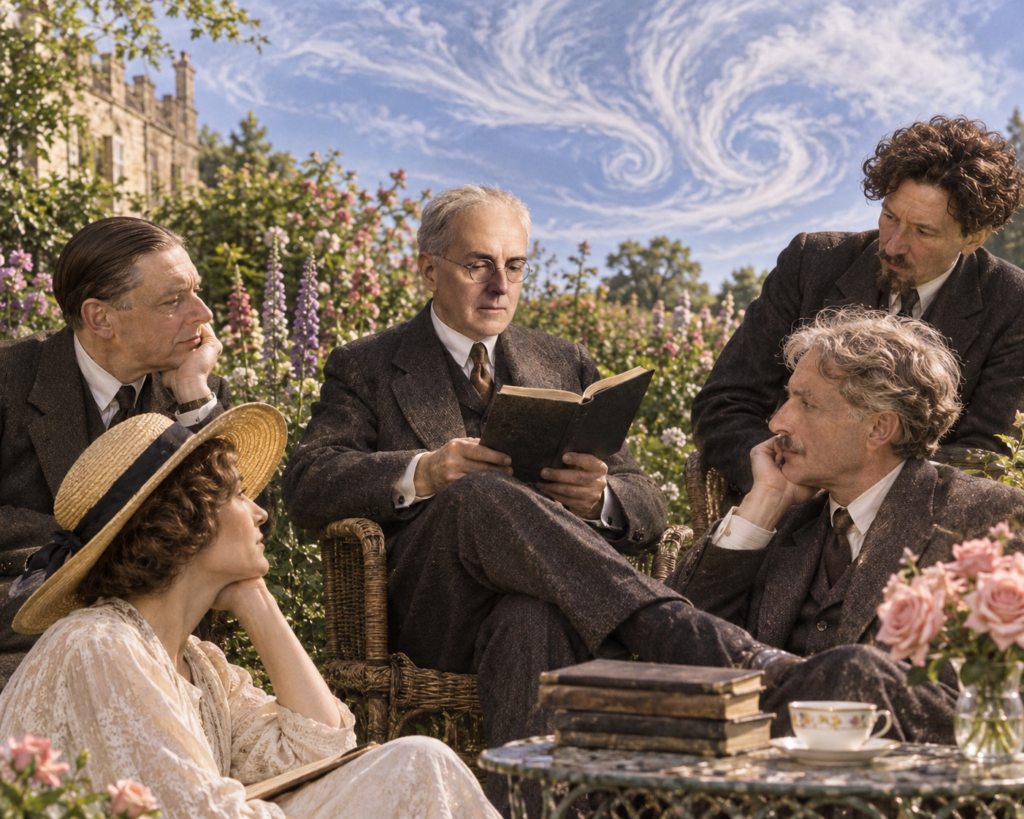
A beautiful way to describe the energy cascade of turbulence in the atmosphere. Richardson adopted the poem’s structure from Siphonaptera, a poem from Augustus De Morgan about fleas. But it was quite the adaptation! Something that stuck with me through the years and good enough for a high hobby score.
Survivor 86
I think Lewis Fry would be a poor Survivor contestant and would likely be eliminated early on. Perhaps he could ally with Bjerknes to lay down some awesome weather forecasts, but any challenges requiring physicality or endurance would be problematic. On the plus side, Richardson is war veteran and had to dodge shells while transporting the wounded during the first Great War, so he must have some toughness and resilience in his character. Now that I think about it, maybe I’m underestimating his chances…
Beard 50
This category has been a big zero for our legends so far but there is evidence that Richardson at one point had a mustache! 50 points!
Beer Buddy 96
I want to hang out with this guy. He seems to have been an introvert who likes to work alone, and yet he had a wonderfully unique life with lasting accomplishments in several disciplines, not just meteorology. He lived through both world wars, the Titanic disaster, Great Depression, and the Hoover administration. Not only did he live through WWI, he was in the middle of it – while creating the world’s first objective weather forecast! There are stories there, and it would be fun to try to get him to talk in depth about them all!
His Quaker roots and strong moral convictions suggest that Richardson likely didn’t drink alcohol. As much as I admire that, I guess the category is called “Beer Buddy” so I can’t quite go GOAT on his ranking.
Overall 88
If this rating was for an entire career of meteorology plus all of the other stuff he did, it would be much higher. But this is a Legends of Meteorology column, so I’ll stick to the weather things. Richardson published the road map for modern weather forecasting and showed the world how it could be done. It didn’t work at the time for reasons he could not have possibly known. But his calculations were sound, and he did live long enough to learn of the first successful weather forecast by the Charney group in 1950. Richardson’s other contributions in fluid dynamics, aviation, and even oceanography certainly cement his place in the pantheon of weather legends.
Sources:
Ashford, O., 1985: Prophet or Professor? The Life and Work of Lewis Fry Richardson. Bristol: Adam Hilger. Pp xiv-364. ISBN 0-85274-774-8.
Gleditsch, N.P., 2020: Lewis Fry Richardson – A Pioneer Not Forgotten. In: Gleditsch N.P. (eds) Lewis Fry Richardson: His Intellectual Legacy and Influence in the Social Sciences. Pioneers in Arts, Humanities, Science, Engineering, Practice, Vol. 27. Springer Cham. https://doi.org/10.1007/978-3-030-31589-4_1
Gold, E., 1954: Lewis Fry Richardson. Obit Note, Fellows R. Soc., 9:217-35. Available at https://royalsocietypublishing.org/rsbm/article-pdf/9/1/216/179569/rsbm.1954.0015.pdf
Hunt, J.C.R., 1998: Lewis Fry Richardson and his Contributions to Mathematics, Meteorology, and Models of Conflict. Ann. Rev. Fluid. Mech., 30:xiii-xxxvi. https://doi.org/10.1146/annurev.fluid.30.1.0
StudyGuides.com, cited 2026: Richardson, LF (Pioneer in Turbulence). Available online at https://www.studyguides.com/study-methods/overview/cmolzje6czugj01kh0ohd5vhx
Next Legend: William Gray
Dr. Chris Hennon is the Founder and Lead Consultant for Hennon Weather Services LLC. He is a Certified Consulting Meteorologist and former Professor of Atmospheric Science with expertise in Tropical Meteorology and Weather Forecasting.